
Luxury Vinyl
Is Luxury Vinyl Plank Really Waterproof? What Metro Detroit Homeowners Should Know
By Quick Carpet ·
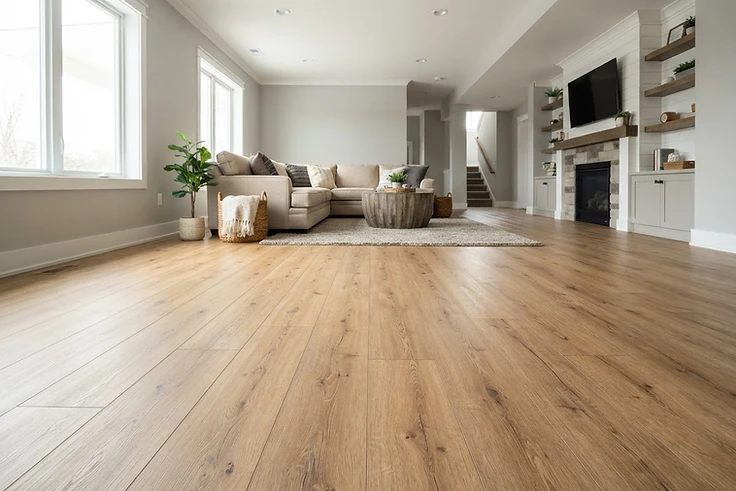
From lake-effect snow and slushy driveways to wet boots tracking road salt through the entry, a Michigan home puts its floors through a lot. Snow melts, pets come in soaked, kids spill, basements get humid, and the seasons keep changing. It is exactly this combination of moisture and traffic that leads so many Metro Detroit homeowners to ask the same question: is luxury vinyl plank really waterproof? The short answer is that many modern LVP products have waterproof cores, which means the plank itself can handle spills and dampness very well. The important part — and the part that causes the most confusion — is that waterproof flooring does not mean the entire flooring system or subfloor is protected from unlimited water exposure. Understanding that distinction early helps you choose the right product for the right room and set realistic expectations for how it performs in your home.
Comparing products for a wet Michigan climate? We help homeowners choose the right waterproof vinyl plank flooring Metro Detroitwith a free in-home estimate and professional installation.
Is Luxury Vinyl Plank Actually Waterproof?
To answer that honestly, it helps to understand how modern luxury vinyl plank is built. A quality LVP plank is made up of several layers working together. At the center is a rigid or semi-rigid core, often a stone-plastic composite (SPC) or wood-plastic composite (WPC), which is engineered to resist water. On top of that core sit a printed design layer that gives the plank its wood or stone look, a clear wear layer that protects against scratches and wear, and a protective top finish. The edges lock together with a click locking system that keeps planks snug without glue.
- Waterproof core — the SPC or WPC core that does not absorb water the way a wood-based product does.
- Wear layer — the clear, durable surface that resists scratches, scuffs, and daily wear.
- Printed design layer — the realistic wood or stone visual under the wear layer.
- Protective top layer — an additional finish that guards against stains and fading.
- Locking system — the click edge that holds planks together without adhesive.
So yes, the plank itself can resist water extremely well. Many LVP products are genuinely marketed as waterproof, and that claim is accurate for the material. What it does not mean is that water can never create problems underneath or around the flooring. A waterproof plank sitting over a wet subfloor is still a wet subfloor, which is why the installation matters as much as the product.
Waterproof vs. Water-Resistant Flooring
Waterproof and water-resistant sound similar, but they describe different levels of protection. Understanding the difference in plain terms helps you compare products without overselling any one of them.
- Waterproof LVP — the plank's core resists water, so a spill or a damp mop is not going to swell or ruin the material.
- Water-resistant laminate — engineered to handle splashes and cleaning, but the wood-based core can still be damaged by standing water at the seams.
- Traditional hardwood — real wood is sensitive to moisture; spills left sitting can stain, warp, or cup the boards over time.
- Carpet — absorbs moisture and holds it in the pad and fibers, so spills need fast cleanup and some rooms are a poor fit for it.
None of these is a universal winner. Waterproof LVP gives you the most forgiving surface when water is a concern, while carpet still wins for comfort and quiet, and hardwood still wins for the look and feel of real wood. The practical question is which product fits the room and the household, not which one is best on paper.
What Happens If Water Gets Under Luxury Vinyl Plank?
This is the part every homeowner should understand. While the plank itself may not absorb water, moisture that gets underneath the flooring can still cause real problems. Water rarely stops at the surface; if there is a leak, a flood, or condensation, it can travel beneath the planks and affect everything below.
- Subfloor — wood subfloors can swell, rot, or grow mold if they stay wet under waterproof flooring.
- Adhesive — on glued installations, moisture can weaken the bond between plank and subfloor.
- Underlayment — a pad or underlayment can hold water against the subfloor if it is not moisture-rated.
- Baseboards and walls — water that travels to the edges can wick into trim, drywall, and baseboards.
- Mold and mildew — trapped moisture in a dark, warm space creates the conditions mold needs to grow.
That is why flooding, plumbing leaks, and standing water should always be addressed quickly, no matter what flooring is on top. Waterproof LVP buys you time and protects the surface, but it does not make a flooded room a non-issue. The faster the water is removed and the area dried, the better the outcome for the floor and the home.
Is LVP Good for Michigan Basements?
Basements are one of the places luxury vinyl plank shines in Michigan homes, and it is a strong flooring option for many Metro Detroit and Michigan basements. Below-grade rooms sit over concrete slabs, deal with seasonal humidity swings, and run cooler than the rest of the house — conditions that hurt solid hardwood and many laminates but that LVP handles well. That said, a basement install is not the same as a main-level install, and the concrete has to be evaluated first.
- Concrete slabs — most Michigan basements are poured concrete, which LVP can float over when prepped correctly.
- Basement moisture — humidity and the occasional damp slab need to be assessed before any flooring goes down.
- Temperature changes — basements swing in temperature and humidity seasonally, which LVP tolerates better than wood-based products.
- Below-grade installations — some products are rated for below grade and some are not, so the product has to match the space.
- Moisture testing — a slab should be tested for moisture vapor before installation to confirm it is within the product's limits.
- Proper preparation — the concrete may need to be cleaned, leveled, or paired with a moisture barrier before planks go down.
The condition of the concrete and its moisture level should always be evaluated before a basement floor is installed. For a deeper look at below-grade options, read our guide to the best flooring options for Michigan basements. The right product over a properly prepped slab is a combination that lasts; the wrong product over a wet slab fails regardless of how waterproof the plank claims to be.
Is Luxury Vinyl Plank Good for Kitchens?
Kitchens are one of the most common rooms where LVP is selected, and for practical reasons. A kitchen combines spills, dropped food, frequent cleaning, pet traffic, and heavy use of tables and chairs — exactly the conditions a waterproof-friendly surface is built for.
- Spills — water, sauce, and drinks wipe up without soaking in.
- Dropped food — a hard, sealed surface cleans quickly and won't stain the way carpet will.
- Cleaning — LVP tolerates damp mopping and routine cleaning well.
- Pets — food bowls, water dishes, and muddy paws are easier to manage on a waterproof surface.
- High traffic — the wear layer stands up to the constant in-and-out of a busy kitchen.
- Chairs and tables — a quality wear layer resists the scuffs and marks from moving chairs.
Kitchens are also where a dishwasher leak or a fridge line failure can dump water on the floor, which is another reason a waterproof-friendly surface is a sensible choice. As with anywhere, the subfloor still has to be sound — but for the surface itself, LVP is one of the most forgiving options for a Michigan kitchen.
Can You Use LVP in Bathrooms?
Yes, many LVP products are suitable for bathrooms when they are properly installed. Bathrooms are a smaller, wetter version of the kitchen problem — there is water near the sink, wet feet after a shower, high humidity, and occasional plumbing leaks around the toilet or tub. The plank's waterproof core handles the surface moisture well, but bathroom installs still come with a few specifics worth knowing.
- Water near sinks — splashes and drips at the vanity wipe up easily.
- Wet feet — LVP is comfortable and slip-tolerant enough for a bathroom floor.
- Humidity — steamy showers raise the room's humidity, and a quality plank tolerates it.
- Toilet leaks — a slow leak at the base is a subfloor issue, not a plank issue, and should be fixed before new flooring goes down.
- Bathtub and shower areas — the plank meets the tub or shower at a transition, and that edge has to be sealed properly.
Proper installation around edges, transitions, fixtures, and walls still matters in a bathroom. A waterproof plank with a poorly sealed perimeter can still let water find its way beneath. Confirm with your installer how the edges and transitions will be handled before the work begins.
What About Michigan Snow, Salt and Wet Shoes?
Michigan winters are a real test for any floor. From November through March, Metro Detroit homes deal with snow, slush, melting ice, road salt, and boots that are soaked at the door. Hard surface flooring near the places people enter the home can make winter noticeably easier to live with.
- Entryways — a waterproof surface catches melting snow and salt before it reaches carpet.
- Mudrooms — the transition zone where boots, coats, and bags get dropped takes a beating.
- Kitchens — back doors and garage entries bring the same slush inside.
- Hallways — the path from the door to the rest of the house carries the runoff.
A few basic habits protect the floor and extend its life. Use entry mats both outside and inside the door to catch salt and water at the threshold, set up a boot tray for wet footwear, and sweep or mop regularly during winter to keep road salt from building up and dulling the wear layer. Salt itself won't ruin a waterproof plank, but leaving it ground in over months isn't good for any floor.
Does the Subfloor Matter?
It matters a great deal. Even waterproof flooring depends on a properly prepared subfloor, because the plank is only as stable as what it sits on. A great product installed over a bad subfloor can still end up with problems.
- Flatness — planks need a flat surface; dips and humps cause click edges to separate or flex underfoot.
- Moisture — a wet subfloor has to dry and be tested before any flooring covers it.
- Cleanliness — debris, old adhesive, and dust under the planks cause clicking and unevenness.
- Structural condition — soft spots or rot in a wood subfloor have to be repaired, not covered up.
- Concrete preparation — a slab may need patching, leveling, or a moisture barrier before installation.
Installing expensive flooring over a bad subfloor is one of the most common ways a job goes wrong, and it is the kind of issue a free in-home estimate is designed to catch before the planks are even ordered. The subfloor is the foundation; the plank is the finish.
Luxury Vinyl Plank vs. Laminate When Water Is the Main Concern
LVP and laminate look similar in a showroom photo, but they behave differently once water enters the picture. When water is the main concern, a simple comparison helps clarify which one fits the room. For a fuller breakdown, see our LVP vs. laminate comparison.
- Moisture resistance — LVP's core resists water; laminate's wood-based core is more vulnerable at the seams.
- Durability — laminate's hard surface resists scratches extremely well; LVP is slightly softer but quieter underfoot.
- Appearance — both offer wood and stone looks; laminate textures can feel more authentic, LVP visuals are very close.
- Maintenance — both wipe clean, but LVP is more forgiving of wet mopping and spills.
- Installation considerations — both float over a flat subfloor, so prep matters the same way for each.
Neither is universally better. The right option depends on the room, the household, the budget, and the conditions — a dry upper-level bedroom with big dogs might lean laminate, while a kitchen, bath, or basement that sees water should lean LVP. The honest way to choose is to compare them in your own home, in your own light.
When Luxury Vinyl Plank May Not Be the Best Choice
Part of giving good advice is knowing when to steer a homeowner toward something else. LVP is versatile, but it is not the right answer for every room or every preference. There are situations where another flooring product genuinely makes more sense.
- Customers who prefer real hardwood — no printed visual fully replaces the character and feel of solid wood.
- Certain uneven or damaged subfloors — if the subfloor can't be made flat enough, a different approach may serve better.
- Areas with ongoing water intrusion — a waterproof plank won't fix a basement that actively leaks; the water problem comes first.
- Spaces where carpet provides better comfort — bedrooms, stairs, and family rooms still benefit from warmth and quiet.
- Homeowners prioritizing a different feel or acoustic quality — some people simply prefer the sound and texture of wood or carpet.
The goal is to educate rather than oversell. If LVP is the right fit for your room, we will say so — and if another product serves the space better, we will say that too. That is the advantage of a free in-home estimate with a company that carries all five flooring categories.
Is Waterproof LVP Right for Your Metro Detroit Home?
Luxury vinyl plank is one of the most practical flooring options for Michigan homes because it pairs a waterproof core with a durable, easy-to-clean surface that holds up to snow, salt, spills, kids, and pets. The key takeaway is that waterproof describes the plank, not the entire flooring system — the subfloor, the installation, and the edges all still matter. When those are handled correctly, LVP is a strong choice for kitchens, bathrooms, mudrooms, entryways, and many basements across Metro Detroit. Quick Carpet carries luxury vinyl plank alongside carpet, hardwood, laminate, and vinyl, and we bring samples directly to your home so you can compare them in your own light. During your free in-home estimate, we measure the rooms, evaluate the subfloor, and give you an installed price before we leave. Call (586) 404-3742 or request your free in-home estimate today to see whether waterproof LVP is the right fit for your home.