
Sheet vinyl, LVT and LVP — the actual differences
Sheet vinyl comes in a large continuous roll, which means very few seams for water to find; it's the value option and a favorite in laundry rooms and utility spaces. LVT is a rigid tile with stone or ceramic visuals and a real wear layer. LVP is the plank version with wood visuals and the thickest wear layers of the three. Price, realism and repairability go up as you move from sheet to LVT to LVP.
Choosing what fits your room
A rental laundry room and a family kitchen you plan to keep for fifteen years shouldn't get the same product. We ask how long you're staying, who's on the floor, and whether it's below grade, then bring the two or three samples that actually make sense instead of a whole catalog.
Durability and moisture
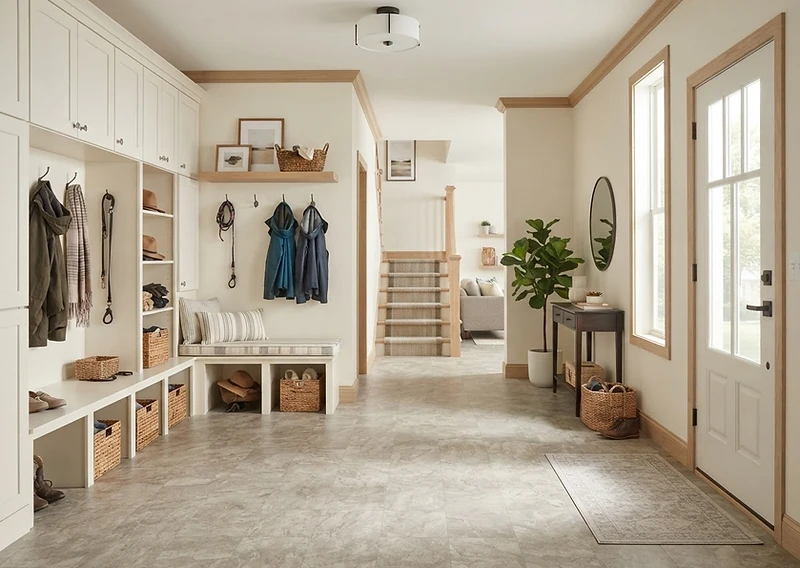
Vinyl is the category we recommend most for rooms where water lives — entryways where winter salt and slush come in, kitchens, baths, mudrooms and basements. Specific water and wear ratings vary by product, so we go over the spec on the exact product you're choosing.
Maintenance
Sweep and damp mop with the manufacturer's recommended cleaner. No refinishing, no sealing, no waxing on modern products.
Professional vinyl installation
Sheet vinyl demands accurate templating and clean seam and wall work; LVT and LVP demand a flat, prepped subfloor. Our certified installers handle both, remove old flooring, prep the substrate and finish transitions and thresholds so the floor looks right where it meets the next room.